
Crafting Personalized Adventures, One Journey at a Time
Smart Planning, Calming Tools, and Helpful Tips to Make Every Journey More Comfortable for Neurodivergent Travelers
Traveling with Sensory Processing Disorder can be challenging, but with Preparation, Visual Tools, and Calming Strategies, Families can Enjoy Stress-Free, Memorable Vacations.


Traveling with a neurodivergent traveler requires intentional planning and flexibility. This guide focuses on traveling with Sensory Processing Disorder (SPD), a condition often associated with autism, and offers tips to help make your journey more enjoyable and less overwhelming.
Whether it’s sensitivity to noise, light, touch, or unfamiliar routines, understanding how SPD affects travel experiences allows families to proactively prepare for a smoother adventure.
What is Sensory Processing Disorder and How Does It Affect Travel?
Sensory Processing Disorder affects how people receive and respond to sensory input. Someone might be distressed by loud sounds, bright lights, or even water on their face. These behaviors are often misunderstood as difficult or disruptive when, in fact, they are simply coping mechanisms for overwhelming stimuli.
Some individuals are sensory-sensitive (avoiding input), while others are sensory-seeking (actively pursuing input like movement or textures). Each person’s sensory profile is unique, which is why personalized preparation is key.

Common Travel Triggers for People with SPD
Travel can be a sensory minefield. Airports, train stations, and even road trips are filled with loud announcements, bustling crowds, flashing lights, and long wait times. For someone with SPD, these conditions can lead to sensory overload and distress.
But with thoughtful preparation, these triggers can be minimized and the travel experience can become much more manageable.
5 Ways to Prepare for Sensory-Friendly Travel
- Research your destination and plan accordingly. Planning ahead reduces surprises. Look for sensory-friendly attractions, quieter visiting hours, and accommodations with staff who are supportive and understanding. Consulting a Certified Autism Travel Professional (that’s ME!) can offer personalized guidance, especially if your traveler has co-morbidities like ADHD or OCD.

2. Use Visual Schedules. Visual schedules help travelers understand what’s happening and when. Use images, words, or icons to break the trip into clear steps, from checking in at the airport to arriving at the hotel. Review the schedule regularly, mainly when transitions or delays occur.
💡DANIELLE’S TIP: Format it in a way your traveler prefers, like a digital photo, SPD app, laminated card, etc.
3. Pack a Sensory Travel Kit. A personalized sensory kit provides comfort and control. Let your traveler help choose what goes in the bag.
💡DANIELLE’S TIP: Give ownership over the kit, especially if your traveler is old enough to carry it themselves.

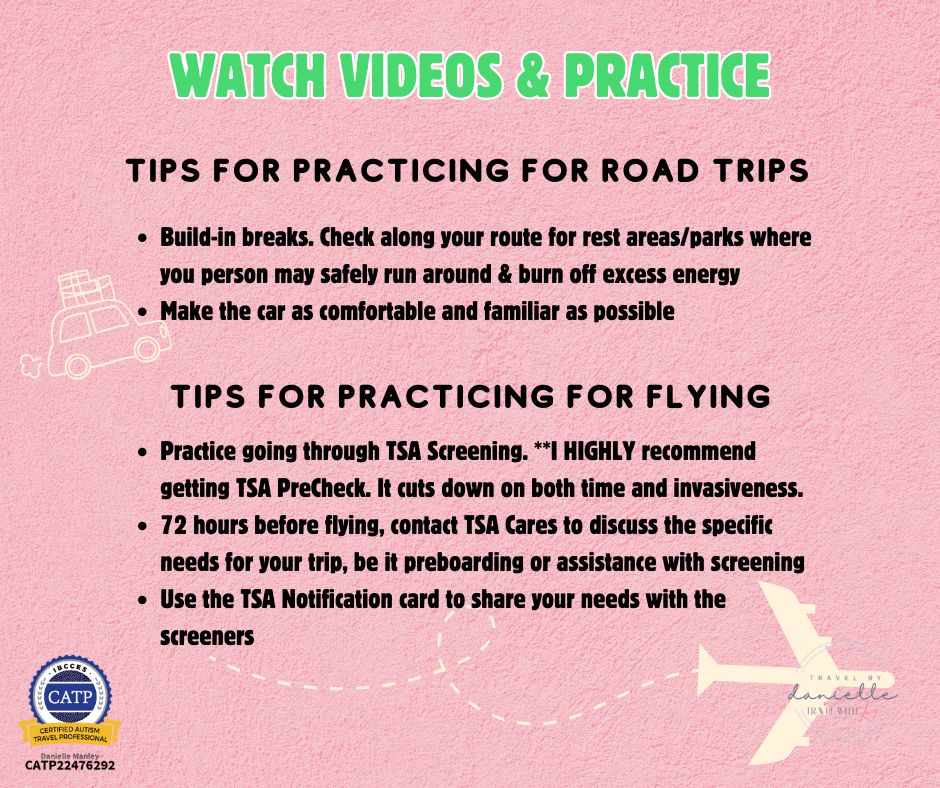
4. Practice and Preview Travel Scenarios. Watching videos or rehearsing scenarios eases anxiety about the unknown. YouTube has videos on navigating airport security or what it’s like to board a plane.
5. Use Social Stories. Social Stories prepare travelers for specific events or challenges, like a delayed flight or hotel check-in. They present info clearly and calmly, reducing anxiety, and helping neurodivergent travelers understand and anticipate different outcomes.
LEARN MORE: How to Write a Social Story.
On-The-Go Strategies for a Smoother Vacation
- Locate Quiet Spaces. Find and use quiet or sensory-friendly spaces to decompress. This can be a Quiet Room, a shaded bench, or even a parked car. Not all breaks need to be structured.
- Take Frequent Breaks. Overstimulation can build up. Schedule regular breaks to reset and use calming techniques, such as deep breathing, hugs, or hand squeezes. Apps like Headspace, Calm, or Moshi can help promote mindfulness and relaxation.
- Expect the unexpected. Even with the best planning, travel is unpredictable. Be ready for delays, crowded lines, or unexpected sounds. Having a distraction plan and backup comfort items can help smooth out rough moments.


Empowering Neurodivergent Travelers
Traveling with Sensory Processing Disorder doesn’t mean avoiding adventures. It means adapting them, making the world more inclusive. With tools like visual schedules, sensory kits, and scenario practice, families can confidently explore the world.
By planning for sensory needs and staying flexible, you can turn potential meltdowns into moments of joy, and create lasting memories for the whole family.
About the Author
As a Certified Autism Travel Professional and seasoned traveler, I combine years of personal experience with professional training to create thoughtful, sensory-aware vacations tailored to every kind of traveler. Whether it’s a high-energy theme park adventure, a peaceful cruise at sea, or a mix of both, I specialize in planning personalized, stress-free itineraries that meet your family’s unique needs.
With countless nights at sea and nearly two decades of hands-on experience with autism travel, both as a parent and a professional, I know how to navigate the details that matter most. My goal? To help you travel with confidence, reduce stress, and create joyful, lasting memories along the way.
Cruises, theme parks, and helping families unplug and reconnect—that’s my happy place. I can’t wait to help you find yours!
